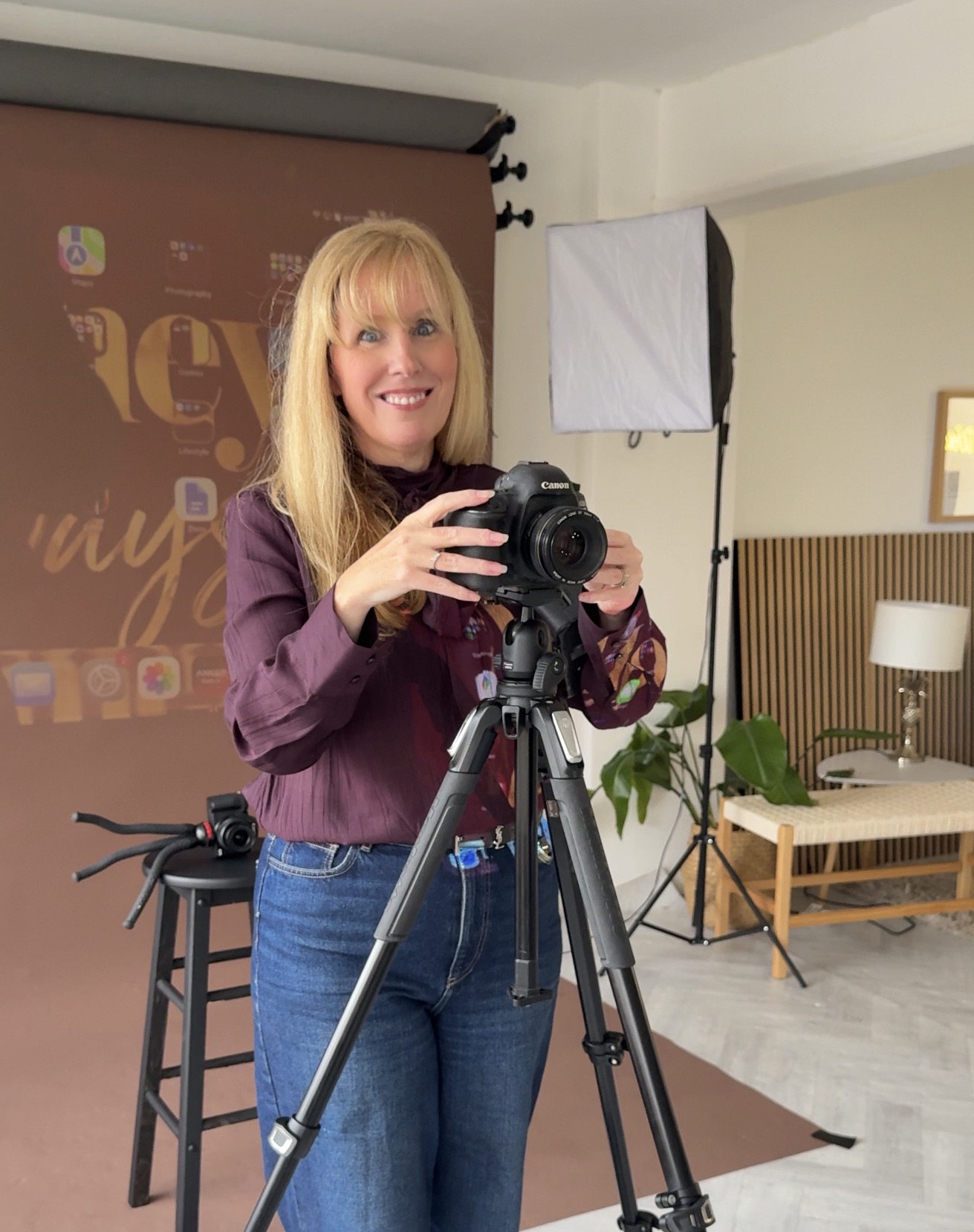
Nearly 20 years of running a photography business has taught me a few things. Some useful. Some expensive. And some I really wish I’d figured out a lot sooner.
When I started my photography business, I thought the difficult bit would be learning how to take good photographs.
Turns out, that was only part of it.
Nobody really tells you how much time you’ll spend doing things that have absolutely nothing to do with pressing the shutter button.
Marketing, pricing, websites, emails, accounts, finding clients, dealing with enquiries, keeping everything organised. Oh, and occasionally remembering to actually take some photographs.
Nearly 20 years later, I’ve built a photography business I love. But I certainly didn’t get everything right along the way.
So, if I could go back and have a word with the photographer I was when I started, here’s what I’d tell her.
1. Being a good photographer doesn’t automatically make you good at running a photography business
You can take beautiful photographs, understand lighting, know your camera inside out and still struggle to make a living from photography.
Because photography and business are two completely different skill sets.
You need to know how to find clients, communicate what you offer, price your work, manage your time and make enough money to keep doing it.
And unfortunately, being brilliant with a camera doesn’t magically make people book you.
What I’d do differently: I’d spend just as much time learning about business as I did learning about photography. Particularly marketing, pricing and understanding who I actually wanted to work with.
2. Being busy doesn’t necessarily mean you’re making money
This one can be a bit of a shock.
You might have a diary full of shoots and feel like you’re doing brilliantly. But when you start adding up the time spent preparing, travelling, photographing, editing, emailing and delivering galleries, the numbers can look rather different.
And that’s before you’ve paid for equipment, software, insurance, website hosting and all the other little expenses that seem to multiply when you’re not looking.
A full diary is lovely. A profitable business is better.
What I’d do differently: I’d work out how much each type of shoot actually costs me in time and money, rather than just looking at the price I’m charging.
3. You don’t have to be everywhere to find clients
When I started, social media wasn’t anything like it is now.
These days, photographers are told they need to be posting reels, creating carousels, showing up on stories, writing blogs, sending newsletters and keeping up with whatever Instagram has decided we’re all doing this week.
It’s exhausting just writing that list.
But here’s the thing. You don’t need to do everything.
You need to understand where your ideal clients are, how they’re finding photographers and what makes them choose one.
For some photographers, Instagram will be brilliant. For others, Google, referrals, local connections or their website might bring in far more enquiries.
What I’d do differently: I’d stop chasing every new marketing trend and concentrate on a few things I could do consistently.
4. Not every enquiry needs to become a booking
When you’re starting out, every enquiry feels exciting.
Someone wants to pay you to take photographs! Brilliant!
And sometimes, because you want the work, you ignore the little signs that perhaps this isn’t quite the right client for you.
Maybe their expectations don’t match your style. Maybe they want far more than their budget allows. Or perhaps you just get the feeling that working together is going to be hard work.
I’ve learnt that being the right photographer for someone matters far more than being available.
What I’d do differently: I’d get clearer about the work I wanted to do and the people I wanted to work with, and stop feeling that I had to say yes to everything.
5. Other photographers don’t have to be your competition
This is something I wish more photographers realised.
It’s easy to look at someone else’s work, their prices, their bookings or their social media following and start comparing.
But there is room for different photographers doing different things.
We all have our own styles, personalities, strengths and ways of working.
And sometimes, knowing other photographers can be one of the best things for your business.
You can share ideas, recommend each other when you’re unavailable, collaborate on projects and have someone who actually understands why you’re getting excited about a new lens.
Or why you’ve spent three hours trying to fix something in Photoshop that nobody else would have noticed.
What I’d do differently: I’d build relationships with other photographers much earlier instead of thinking I had to work everything out on my own.
6. Your website needs to do more than look pretty
As photographers, we’re naturally drawn to the visual side of things.
We want beautiful galleries, lovely layouts and photographs that make people stop scrolling.
And of course, all of that matters.
But a beautiful website isn’t particularly useful if nobody can find it.
Understanding SEO (search engine optimisation) has made a real difference to how I think about my website.
It’s about understanding what potential clients are searching for, creating useful content that answers their questions and making it easier for Google to understand what you offer.
And no, that doesn’t mean stuffing the words ‘photographer in Yorkshire’ into every paragraph until nobody can bear to read it.
What I’d do differently: I’d start learning about SEO much earlier and treat my website as an important part of my marketing, rather than something I built and then forgot about.
7. You don’t have to figure everything out yourself
I think this might be the biggest lesson of all.
Running a photography business can be surprisingly lonely.
You might spend your days meeting lovely clients, but when it comes to making decisions about your business, it’s often just you.
Wondering whether your prices are right. Trying to work out why enquiries have gone quiet. Deciding which software to use. Coming up with ideas for finding new clients.
And while there’s an enormous amount of free information available online, sometimes that’s part of the problem.
You can spend hours watching tutorials, reading advice and collecting ideas without actually getting anything done.
Sometimes what you really need is someone to explain something clearly, show you how they’ve done it and give you the confidence to have a go yourself.
What I’d do differently: I’d find a small group of photographers I could learn from, share ideas with and ask questions without feeling daft.
Which brings me to The Click
After nearly 20 years in photography, I’ve learnt an awful lot about running a photography business.
And I’ve been thinking for a while that I’d quite like to share more of it.
Not just the things that have worked, but the things that haven’t. The systems I use, the marketing I’ve tried, the lessons I’ve learnt and the little things that make running a business easier.
So I’ve created The Click, a small membership for photographers who want to develop the business side of what they do.
We’re starting with a three-month pilot in December, with monthly online learning sessions and an opportunity to get together in person.
We’ll be looking at business basics, finding the right clients, marketing, systems and the practical side of running a photography business.
There’ll be plenty of opportunities to ask questions, share experiences and learn from each other.
And because I want it to feel like a proper little community, I’m keeping the pilot to a maximum of ten photographers.
No complicated business jargon. No pretending I’ve got all the answers. Just useful advice, honest conversations and a bit of encouragement along the way.
And if you’re a photographer who’s been in business for a while, I’d love to know: what’s the one thing you wish someone had told you when you started?
Leave a Reply